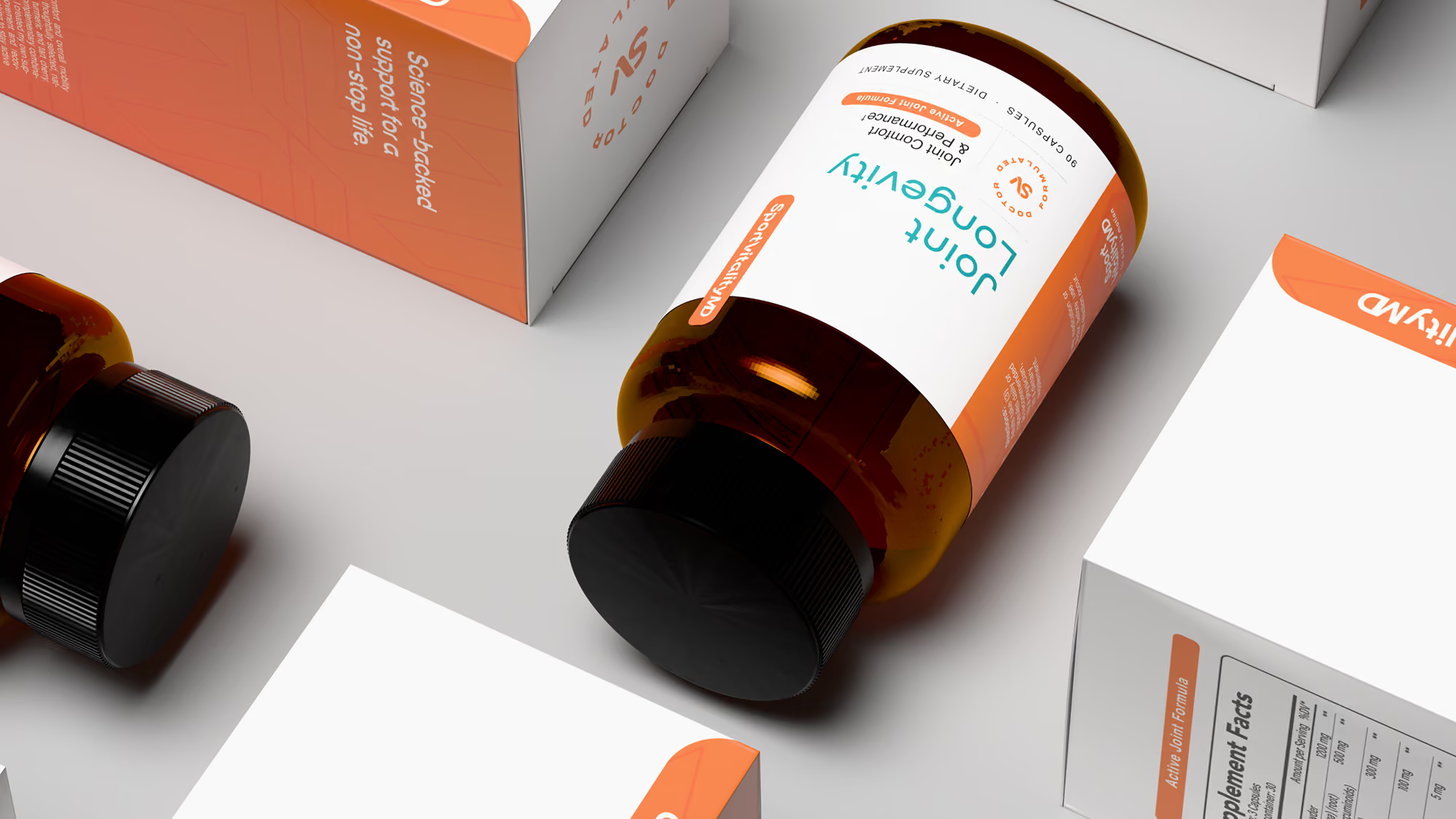
Why AI Isn't Ready to Design Your Supplement Brand or Packaging
AI can generate a slick supplement bottle in seconds, but a render isn't a brand. Here's the system-first case for why AI can't design supplement packaging.

A render is not a brand
Type a few words into one of the new AI packaging tools and you'll have a photoreal supplement bottle on screen in seconds. It looks finished. That's the trap. The image is real; the brand behind it isn't. What separates a generated mockup from something you can ship, defend, and grow is the part AI quietly skips, and in supplements that gap is unusually wide.
We're not anti-AI. We use it daily for ideation, reference, and early visualization. But there's a difference between a tool that helps a designer think and a tool sold as a replacement for the design itself. Here's where that second promise breaks down.
AI gives you the average of everything it has seen
AI generates the statistical middle of its training data, which means it produces the look every other brand using the same tools is also producing. Ask for a "clean, modern creatine label" and you'll get the same sans-serif, the same muted gradient, the same centered wordmark a thousand other founders are generating this week. On a shelf or a search results page, where the whole job is to look unlike the bottle next to you, sameness is the one thing you can't afford.
Strategy is what prevents that, and it's the layer AI has no access to. It doesn't know who you're for, what you're displacing, or why a buyer should trust you over the incumbent. It can only restyle what already exists.
Why AI can't deliver production-ready supplement packaging
A production-ready file is one a printer can run without sending it back, and a generated PNG is never that. Real packaging is built from dielines (the exact cut-and-fold map for your bottle, box, or pouch), correct bleeds, and color separated for how it actually prints: spot and Pantone matches, varnish and foil as their own layers, white-ink knockouts for clear labels. None of that lives inside an image generator.
What you get is a flat picture of packaging, not the packaging. The moment a real run gets quoted, the file comes back for rebuilding, and you're paying a designer to do the work you thought you'd skipped.
Where AI misses on supplement label compliance
This is the failure mode that costs the most, because a supplement label is a regulated document and AI doesn't know your formula, your dose, or your legal exposure. It will happily render a Supplement Facts panel that's decorative rather than accurate, drop in a structure/function claim that invites FDA scrutiny, or leave out the allergen statement, net quantity, and manufacturer line that have to be there.
The tools that advertise "FDA-compliant" labels are pattern-matching a layout, not reviewing your product. A label that looks compliant but isn't is more dangerous than one that clearly needs work: nothing stops it from shipping.
Can you even own an AI-generated brand mark?
Often, no, and it surprises founders. In its January 2025 report on copyright and AI, the U.S. Copyright Office confirmed that material generated entirely by AI isn't copyrightable, and that entering prompts, however detailed, doesn't make you the author of the output. A logo a generator hands you may be something you can't register or fully defend. And because these models build from existing work, you can't be sure your "original" mark isn't echoing one someone else already owns. The tools themselves say so quietly: read the fine print and most decline to grant exclusive ownership of what they produce, leaving trademark clearance to you. For an asset meant to carry a brand for years, that's a shaky place to start.
Isolated assets aren't a brand system
Even if AI nailed each piece, you'd still be left with pieces. A logo from one prompt, a label from another, a site template from somewhere else: four assets that never quite agree. The work that makes a brand feel credible is the connective tissue, the decisions that make the bottle, the website, the launch render, and the wholesale sell sheet read as one company. That's what system-first means: brand, packaging, web, and product visuals designed together so they reinforce each other instead of competing.
AI is very good at producing one plausible thing on demand. A brand isn't one thing. It's a system that has to stay consistent as you add SKUs, win retailers, and grow, and holding that together is a strategic act, not a generative one. That's the part worth getting right, and it's the part AI isn't ready to do.
Have a project in mind?
Tell us what you're making. Half-formed idea, full-blown launch, or somewhere in between — we're happy to talk it through.