Personalized Supplements Are Growing Fast. Most Brand Systems Aren't Built to Match It.
Personalized nutrition is set to nearly triple by 2033, but most supplement brands still design one static identity for a product that changes weekly.
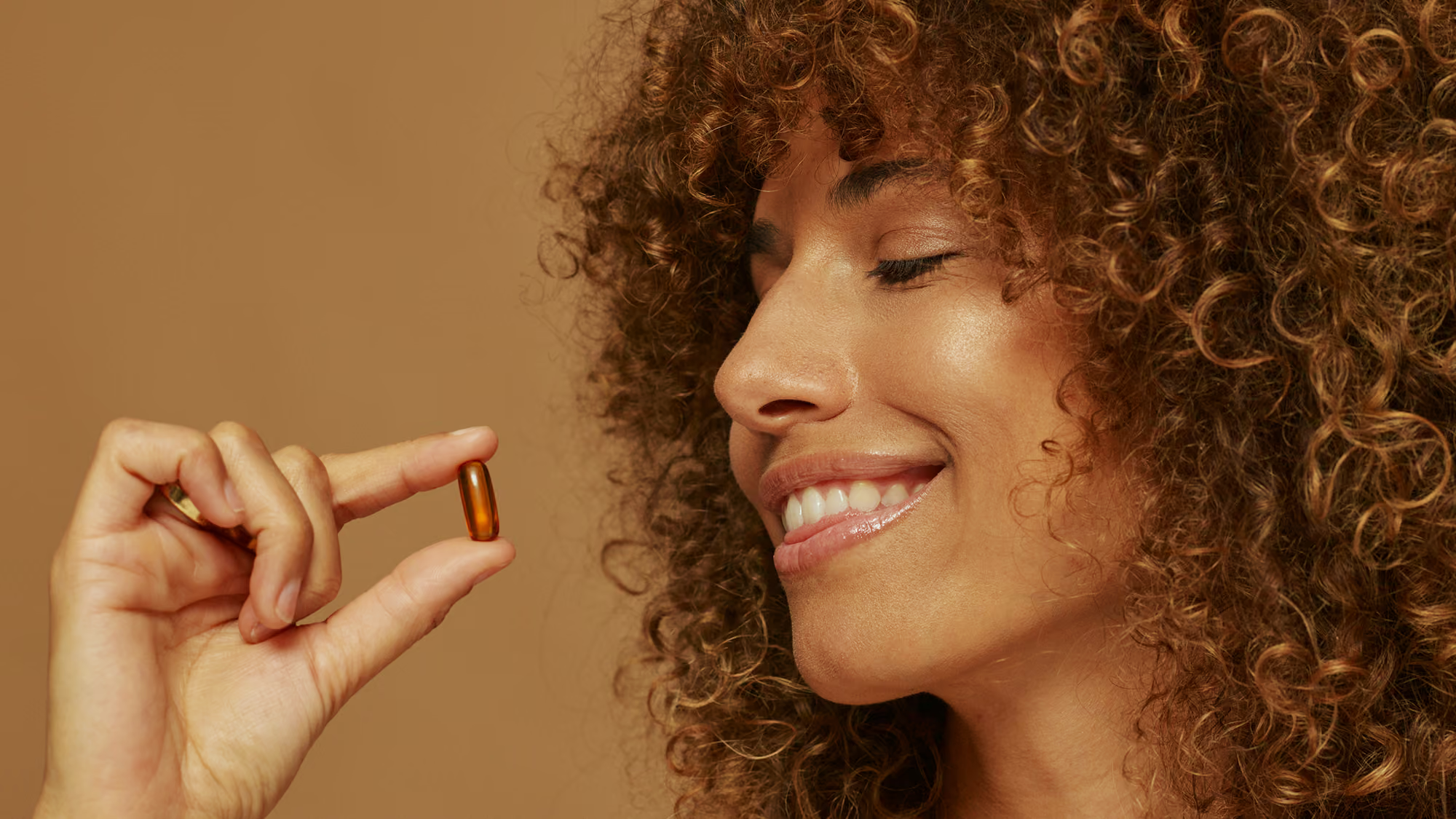
Personalized nutrition is one of the fastest-growing corners of the supplement category, and the growth curve isn't subtle. Grand View Research puts the market at roughly $16 billion in 2025, climbing to nearly $49 billion by 2033, a compound annual growth rate above 15 percent. Formulation science is racing to keep up: AI-driven recommendation engines, biomarker testing, and subscription models built around an individual's nutrient gaps instead of a generic dose. Glanbia's 2026 consumer research backs up the shift with real numbers: 29 percent of U.S. supplement users say they're influenced by supplements tailored to their specific needs, and 52 percent say they're interested in AI-personalized vitamins.
What's harder to find anywhere in that research is a brand system built to hold that much variation.
Where personalization is actually happening
Most of the investment in "personalized supplements" so far has gone into the backend. DNA panels, biomarker dashboards, algorithmic dosing, and subscription logistics that adjust a formula month to month, sometimes SKU by SKU. That's genuine innovation, and it's why the forecasts keep climbing. But formulation and identity are two different disciplines, and right now one is well ahead of the other.
Most personalized brands still look like static ones
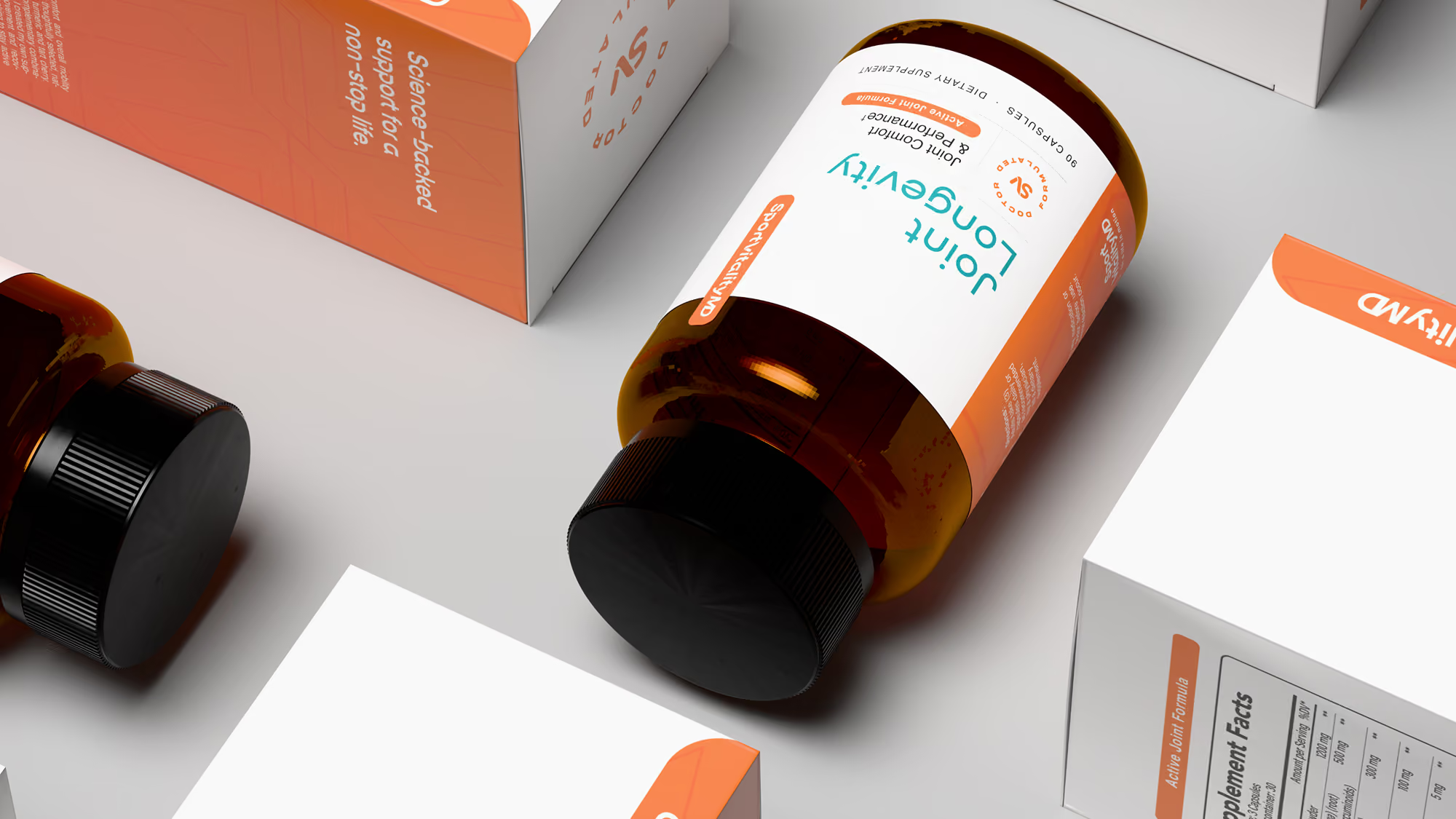
Walk through the category today and the packaging often tells a different story than the formula does. A brand shipping forty different nutrient combinations frequently still designs one label, one box, one static visual identity, then stretches it to cover product variation it was never built to hold. The result is a supplement facts panel that changes weekly, wrapped in a brand system that assumes it never will.
That's not a formulation problem. It's a systems problem, and it shows up whenever a brand invests in the science before it invests in the structure that has to carry it to shelf, to screen, and to the customer's door.
What does a personalization-ready brand system actually need?
It needs the same three things any product-first system needs, tuned for variation instead of a single SKU:
- A modular packaging system that can carry different formulas, ratios, or nutrient counts without a full redesign every time a new combination ships.
- A web experience that explains the reasoning behind the personalization credibly, not a quiz bolted onto a templated site.
- Product visuals that can render dozens of formula variations without a full photoshoot for every one.
Most personalized nutrition brands are still solving each of those with a workaround instead of a system: a generic label template stretched thin, a build-it-yourself quiz that feels like an afterthought, one-off renders per SKU that don't hold up as the line grows. None of that is a formulation failure. It's a brand built for one product trying to behave like a brand built for many.
Where this goes next
The data points in one direction: personalization keeps deepening, not leveling off. Industry research from Eu Natural describes a broader premiumization shift already underway, with supplement brands moving away from commodity multivitamins toward condition-specific formulas that command higher price points. Women's health and hormonal wellness are expected to keep leading that growth, as formulation gets more specific to age, stage, and biology rather than staying general-purpose.
The brands that win the next phase of personalized nutrition won't be the ones with the sharpest algorithm. Algorithms are becoming table stakes. They'll be the ones whose brand system was built from day one to hold thirty formula variations as cleanly as it holds one, so the identity keeps pace with the formulation. That's the gap worth closing now, before a competitor's design system catches up to their science first.
Have a project in mind?
Tell us what you're making. Half-formed idea, full-blown launch, or somewhere in between — we're happy to talk it through.