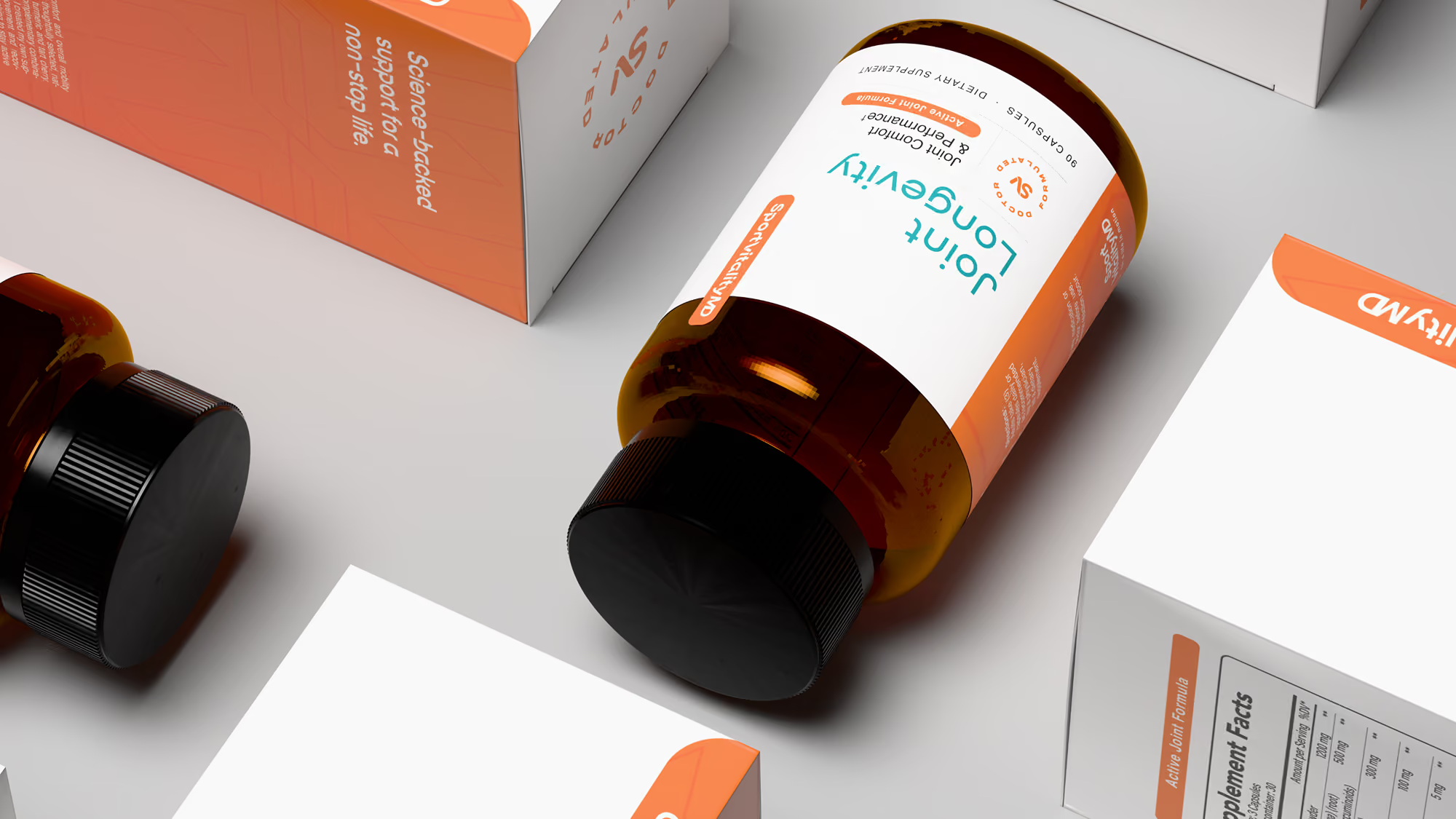
Designing for Flavor and SKU Variants: Growing the Line Without Breaking the Brand
A new flavor or SKU should read as your brand's next chapter, not a rushed reprint. The difference comes down to the packaging system underneath it.

What a packaging system needs to solve before the second SKU ships
A packaging system earns its name the moment a second flavor or SKU has to ship, not before. Any single product can look sharp on its own, sitting alone in a shelf-talk mockup with nothing to answer to. The real test comes later: a second flavor, a third format, a private-label variant for a new retailer, and the studio isn't in the room to make the call. Most first launches solve for the first product. Few plan for the fifth. A packaging system is the set of rules that decides how every future SKU behaves before that SKU exists, so growth reads as expansion, not improvisation.
Consistent architecture: the layout that doesn't move
Consistent architecture means the panel structure and information hierarchy, brand mark, product name, flavor or variant callout, benefit statement, supplement facts, stay in the same position and proportion across every SKU, regardless of flavor or format. This is the part of the system that never gets creative license. A shopper scanning a shelf of six flavors shouldn't have to hunt for the product name on the third one because the layout shifted to "let the design breathe." Locking the architecture is what lets a new bottle drop into an existing lineup and read as family on sight, before anyone reads a word.
Variable color as a coding system, not a mood board
Color is where most multi-SKU lines quietly fall apart, because color is the one variable brands treat as creative rather than structural. A working system assigns color the way a coding scheme assigns meaning: each flavor or variant gets a fixed slot in a defined palette, applied in the same location and proportion every time, whether that's a cap color, a panel band, or an icon fill. The palette is built once, at launch, sized for where the line is headed, not just where it starts. When flavor six arrives, the decision is "which existing color reads right for this flavor," not a fresh design exercise. That's the difference between a palette and a system: one is a set of options, the other is a set of rules.
Naming logic that scales without inventing new language each time
Naming logic is the written rule for how a flavor or variant gets its name, so each new one sounds like it belongs to the same family instead of whatever felt catchy that quarter. Some brands name by ingredient (Mango Ginger, Cacao Nib), some by benefit (Recovery, Focus), some by a house convention that blends both. The name itself matters less than the consistency of the pattern: if the first three flavors are ingredient-forward and the fourth suddenly reaches for a lifestyle name, the shelf stops reading as one line and starts reading as three brands sharing a logo. Writing the naming rule down, even briefly, is what keeps a marketing team from re-deciding the brand's voice with every new SKU meeting.
What breaks first when a brand skips the system
Skip the system and the cracks show in a predictable order: color first, since it feels like the safest place to experiment; then hierarchy, as a new format needs "just a little more room" for a longer name; then naming, once nobody remembers the original logic. None of these failures look dramatic in isolation. A slightly different label layout, a flavor name that doesn't quite match the others, a color that leans a shade too far from the family. But shoppers process packaging as a pattern before they process it as information, and a broken pattern reads as an inconsistent brand even when every individual SKU looks fine. Growth is the test a brand's identity was actually built for. A system built for one product is a good logo. A system built to add a tenth product without a redesign is a brand.
Have a project in mind?
Tell us what you're making. Half-formed idea, full-blown launch, or somewhere in between — we're happy to talk it through.