Email Flows for New Brands: What to Build Before Launch and What Can Wait
Email flows keep selling for a new brand long after launch day. Here are the four to build first, the ones that can wait, and how to keep them on-brand.
Why email flows matter more than campaigns for a new brand
Email flows are automated sequences that send when a customer does something: joins your list, leaves a cart, places an order. Campaigns are the one-off sends you write and schedule. For a brand that's just launching, flows matter more, because they keep selling while you're busy with everything else.
The numbers make the case. Klaviyo's 2026 benchmark data, drawn from more than 183,000 brands, shows flows account for just 5.3% of email sends but nearly 41% of email revenue. Nearly half of that flow revenue comes from first-time buyers, which is exactly who a new brand is trying to reach.
Most new brands get this backward. They spend launch week polishing a big announcement email and switch on a default welcome message as an afterthought. The announcement goes out once. The flows run every day for years.
What email flows does a new brand need at launch?
Four: a welcome series, an abandoned cart flow, a post-purchase flow, and, if you sell anything people run out of, a replenishment flow. Together they cover the moments when a new customer is most likely to act or quietly drift away.
Welcome series
The welcome series introduces your brand to someone who just raised their hand. Three emails is plenty, and Klaviyo's own research across thousands of ecommerce accounts lands on the same number. Use them in order: why the product exists, what makes it different, and proof from real customers. Nobody buys from a brand they met five minutes ago without some reason to trust it, so this flow is doing credibility work, not just delivering a discount code.
Abandoned cart
This is the highest-intent flow you'll run. Someone chose a product and stopped. Two or three emails over a day or two is enough: a simple reminder that shows the exact product, then an answer to the most likely hesitation, whether that's sizing, shipping time, how the product works, or the return policy. If you use a discount at all, save it for the last message.
Post-purchase
The post-purchase flow is where a first order turns into a habit. Confirm the order, then teach: how to use it, what to expect, what pairs well with it. Good products fail quietly all the time because customers use them wrong or give up before they see the payoff. A clear "here's how to get the most out of it" email does more for retention than any coupon.
Replenishment
Replenishment emails remind customers to reorder before they run out, and they should be timed to the product itself. A 30-day supply of coffee, skincare, or supplements should prompt a reorder around day 21 to 24, early enough to arrive before the customer runs out. If you offer subscriptions, this is the natural place to pitch one. It's also one of the few spots where a packaging decision, how much goes in the box, directly sets the marketing calendar.
Which email flows can wait until after launch?
Browse abandonment, win-back, VIP, and sunset flows are all worth building, just not first. Each depends on something a new brand doesn't have yet: enough traffic for browse triggers to mean anything, customers who've been around long enough to lapse, or a group of repeat buyers worth rewarding. Build them after 60 to 90 days of real purchase data. They'll be better for it, because you'll know how long customers actually take to reorder instead of guessing.
Your email flows are part of the brand system
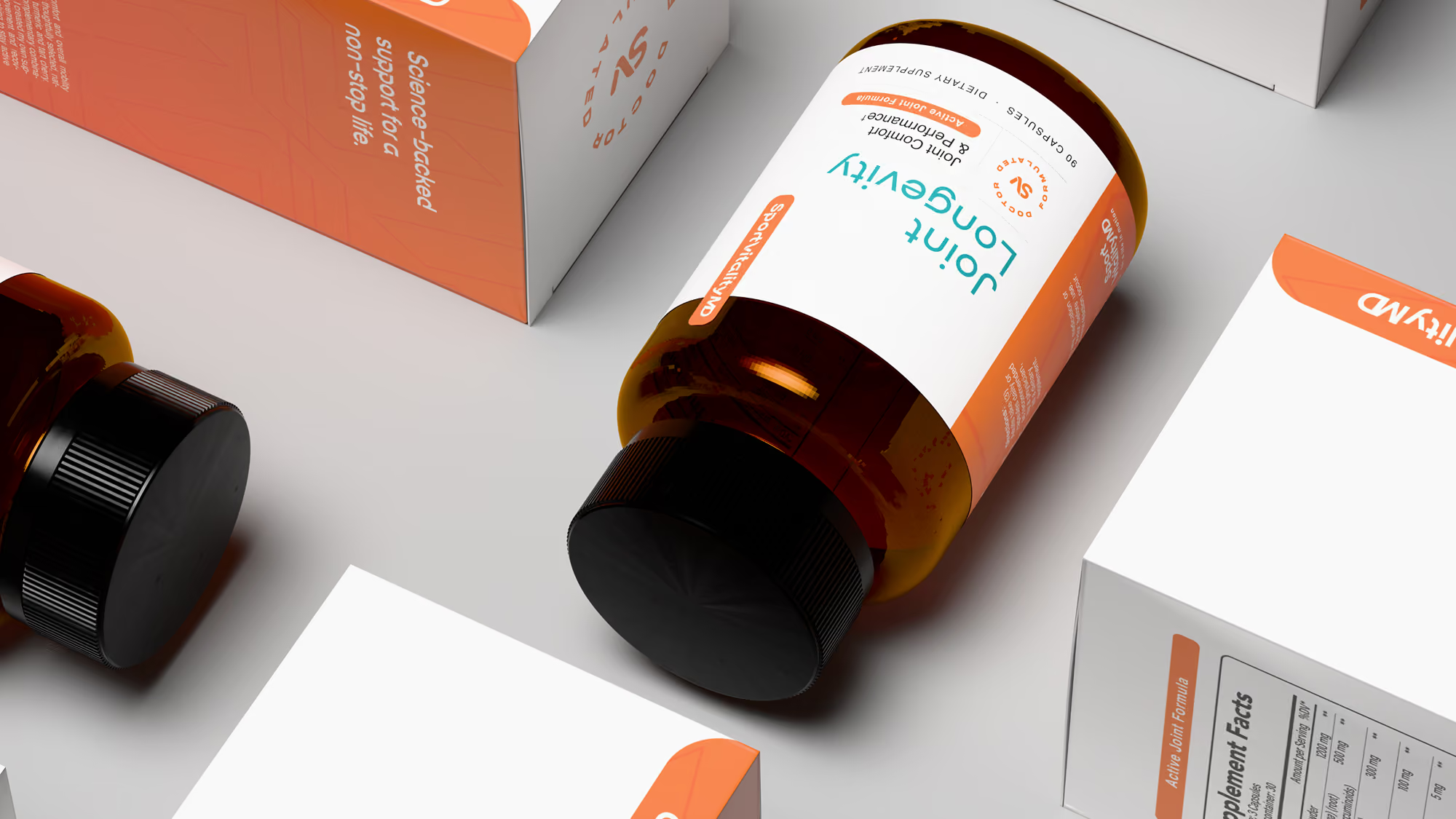
Email is often the last surface a new brand thinks about and the first one a customer sees after buying. If the packaging is polished and considered but the welcome email looks like a stock template, that gap reads as a smaller, less established company. Use the same typography, color, photography, and product renders across your emails, site, and box. That consistency is what makes a three-month-old brand feel like it's been around for years.
The same goes for what you say. Product claims in a marketing email are advertising, and the FTC expects them to be backed up, same as anywhere else. If the label can't make a claim, the welcome series can't either. Writing flows alongside the packaging and site copy, rather than months later from a template, keeps the claims consistent and the voice recognizable.
A launch announcement gets one shot at someone's attention. A well-built set of flows gets a new shot every time someone signs up, adds to cart, buys, or runs low. That's the email work worth finishing before launch day.
Have a project in mind?
Tell us what you're making. Half-formed idea, full-blown launch, or somewhere in between — we're happy to talk it through.