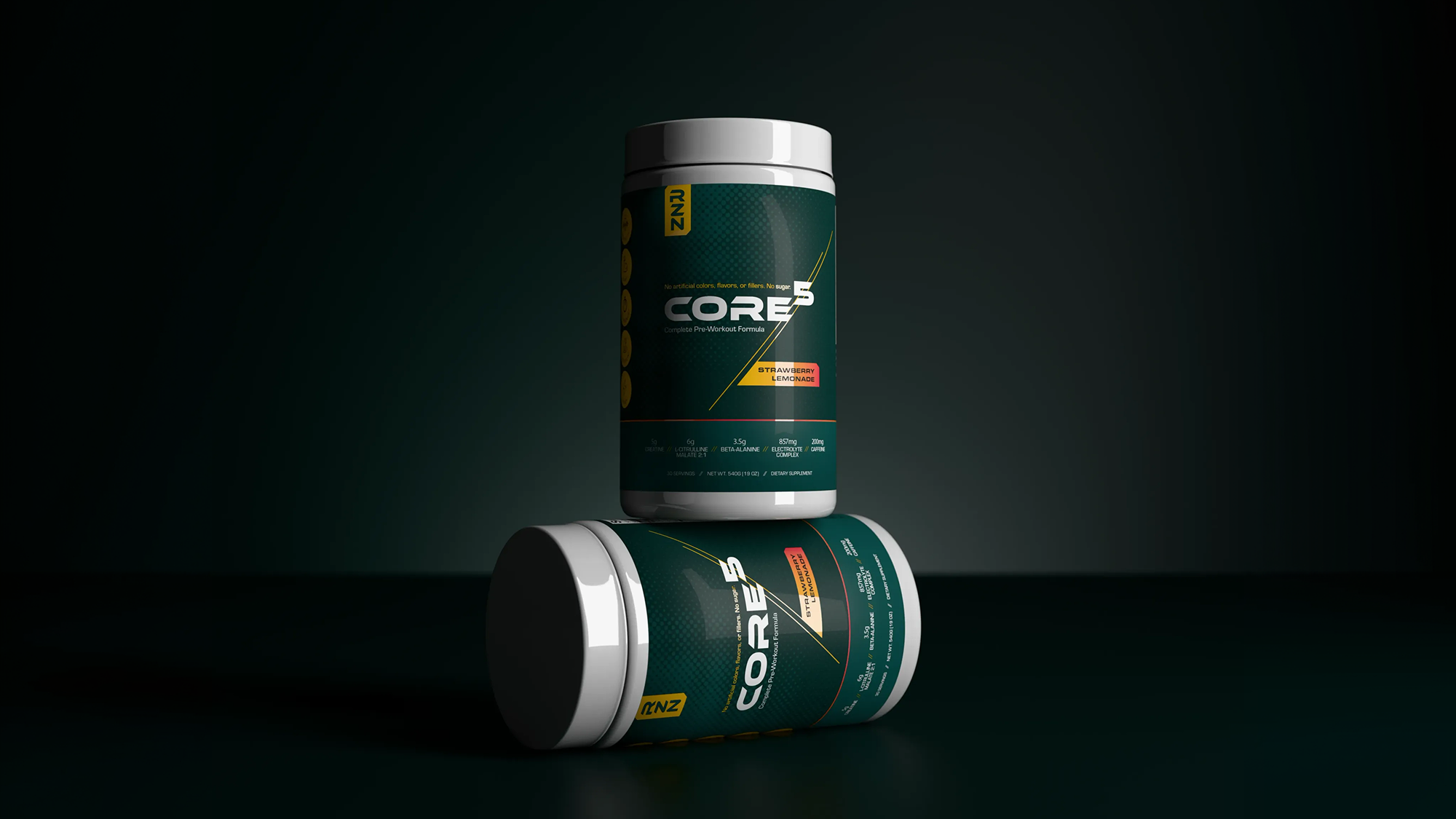
Designing a Supplement Brand That Works in Retail and DTC
A supplement brand selling in both retail and DTC needs packaging and site design built as one connected system, not two different brands competing for attention.

What it means to design for retail and DTC at once
Designing a supplement brand for retail and DTC means building one visual and messaging system that performs under two very different conditions: a crowded shelf competing for a two-second glance, and a product page or unboxed mailer competing for trust. Most brands don't fail at one or the other. They fail at treating them as the same problem.
Retail and DTC ask packaging to do opposite jobs. A shelf has to win attention in a noisy aisle, under fluorescent light, next to a dozen near-identical competitors. A DTC unboxing has time. The customer already bought. Now the packaging's job is to confirm they made the right call and make them want to come back. Same product, two completely different moments of truth.
Where retail and DTC packaging actually diverge
The difference isn't cosmetic. It's functional.
On the shelf
Retail packaging has to read fast. Bold color blocking, clear benefit language, and a front panel that communicates what the product does before a shopper picks it up. It also has to survive handling, freight, and planogram requirements without the design breaking down at a distance.
On the doorstep
DTC packaging gets to slow down. There's no shelf-mate to out-shout, so the opportunity shifts to storytelling: what's printed inside the box, how the product is presented when it's opened, whether there's a card or insert that makes the brand feel considered rather than generic. This is also where a brand can afford more nuance in tone, since the buyer is already sold.
A brand that only designs for one of these channels usually shows it the moment it enters the other. Shelf-first packaging can feel cold and transactional when it lands in a mailer. DTC-first packaging, built around an unboxing moment, often disappears completely at retail because it was never tested at three feet under store lighting.
Why the website has to carry weight the shelf never did
A product-first e-commerce site is where a supplement brand does the explaining that packaging physically can't. Ingredient sourcing, third-party testing, dosage logic, the founder's reason for building the thing in the first place: none of that fits on a label, but all of it belongs somewhere a buyer can find it in thirty seconds. When the website and the packaging are built off the same visual system, that information reinforces what the shopper already saw on shelf instead of introducing a brand that looks unfamiliar.
Building one system instead of two brands
The brands that hold up across channels don't run two separate design efforts and hope they match. They start from a single system: one typography set, one color logic, one voice, applied with channel-specific emphasis rather than channel-specific identities. The logo, the core palette, and the tone of voice stay constant. What flexes is hierarchy: what gets bigger on shelf, what gets more room to breathe online, and how much explanation each surface can carry.
This is also where a lot of otherwise good-looking brands get exposed. A striking bottle design with a website that feels like an afterthought signals the same disconnect as a beautiful site backing up packaging that looks like every other supplement on the shelf. Buyers notice the seam even when they can't name it.
What to prioritize when you can't do everything at once
Most early-stage supplement brands aren't launching into full omnichannel distribution on day one, and trying to design for every future channel up front usually just slows the launch down. The more useful approach is designing the core system, the identity, the packaging structure, the site architecture, so it can extend into a new channel later without a rebuild. A retail-ready label variation or a DTC insert should be an extension of the existing system, not a reason to reopen brand strategy.
A supplement brand that works in retail and DTC isn't two brands wearing the same logo. It's one system built with enough range to do its job wherever the customer happens to meet it.
Have a project in mind?
Tell us what you're making. Half-formed idea, full-blown launch, or somewhere in between — we're happy to talk it through.