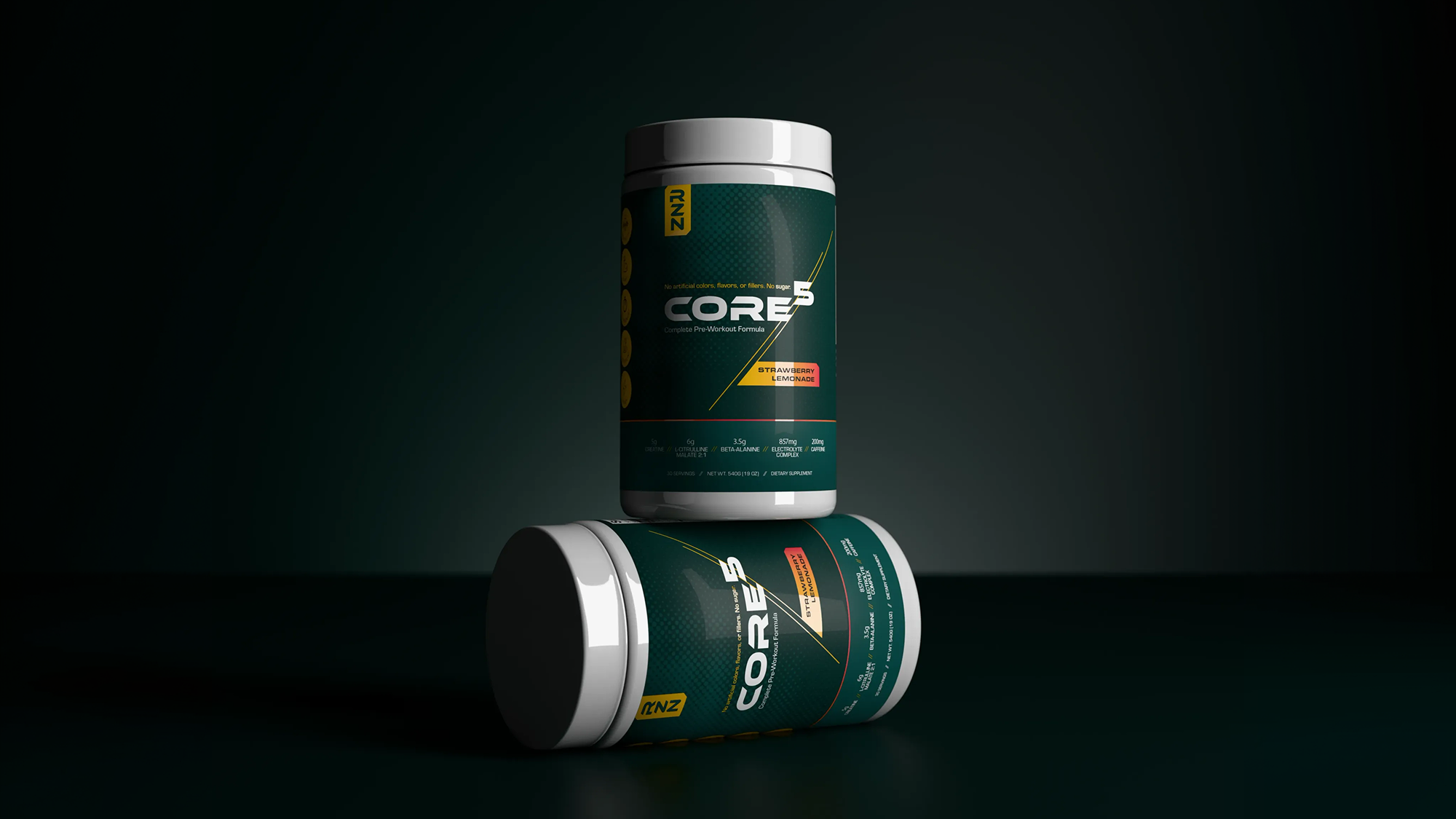
The System-First Approach: Designing Brand, Packaging, and Web Together
When identity, packaging, and digital are designed as one system, a product looks credible on day one — and stays consistent as it grows.

Most brands aren't designed. They're assembled. A logo from one freelancer, packaging from whoever the manufacturer recommended, a website built from a template six months later. Each piece is fine on its own. Together, they don't quite add up — and customers feel the gap before they can name it.
The cost of designing in pieces
When brand, packaging, and web are made separately, small inconsistencies pile up. The blue on the bottle isn't quite the blue on the site. The voice on the label is confident; the voice in the product description is generic. The logo that looked sharp in the original file turns muddy when it's shrunk onto a supplement facts panel.
None of these is fatal alone. But credibility is cumulative. A shopper deciding whether to trust a new supplement is reading dozens of these signals at once, mostly without realizing it. Disconnected pieces quietly erode the very confidence you need them to build.
What system-first actually means
Designing system-first means deciding how every surface works together before designing any single one. The color palette is built to survive both a backlit screen and a matte label. The type system has a version that holds up at regulatory small-print sizes. The logo is drawn to work as an app icon, a debossed cap, and a site header — not redrawn three times by three different people.
The brand becomes a set of rules, not a pile of files. That's the difference between a brand that holds together and one that drifts.
Where the system shows up
The payoff is clearest at the two moments that matter most: the shelf and the screen.
On the shelf
Packaging designed as part of the system carries the same equity the rest of the brand is building. It reads as the same company a customer might have seen on Instagram or heard on a podcast — not a stranger. Recognition does the heavy lifting that a lone product, fighting for attention, would otherwise have to do by itself.
On the screen
A product-first website built from the same system doesn't have to reintroduce the brand. The visual language is already familiar, so the site can focus on its real job: helping someone understand the product and buy with confidence. Less friction, fewer second-guesses.
Designing for the brand you'll be
The strongest reason to work system-first is what happens next. Your second product. A new flavor, a new format, a retail rollout. When the foundation is a system, extending it is straightforward — the rules already exist. When it isn't, every addition becomes a fresh negotiation, and the brand fragments a little more each time.
Designing the system once, and designing it properly, is what lets a brand scale without losing itself.
Have a project in mind?
Tell us what you're making. Half-formed idea, full-blown launch, or somewhere in between — we're happy to talk it through.